Rising from the Aegean Sea on a crescent of volcanic rock, Milos has been shaping human history since the Stone Age. From obsidian traders to Roman conquerors and the birthplace of the world's most famous statue, this island's story is as dramatic as its landscape.
Milos holds one of the most remarkable prehistoric records in the entire Aegean. Archaeological evidence confirms human settlement on the island as far back as 5,000 BCE, making it among the earliest inhabited places in the Greek island chain. The volcanic origins of Milos, formed by intense tectonic activity beneath the Aegean plate, gave the island an extraordinary natural gift: obsidian. This jet-black volcanic glass, sharper than steel when fractured, was the most sought-after material of the prehistoric world. Fragments of Melian obsidian have been discovered across sites stretching from mainland Greece to Anatolia and Egypt, confirming Milos as an essential hub of prehistoric exchange.
The ancient settlement of Phylakopi, located on the island's northeastern coast, is one of the most significant Bronze Age sites in the entire Aegean world. Excavated first by the British School of Athens in 1896, Phylakopi reveals three successive city layers spanning the Early, Middle, and Late Bronze Age, roughly from 2300 to 1100 BCE. The site demonstrates sophisticated urban planning, fresco-decorated walls, and imported Minoan and Mycenaean pottery, evidence of a cosmopolitan community fully integrated into wider Aegean trade networks. At its peak, Phylakopi was a prosperous, well-defended town that punched well above its geographic weight in the ancient Mediterranean economy.
No material shaped the ancient world quite like Melian obsidian. For thousands of years before metal tools became widespread, obsidian was the cutting edge of technology, both literally and figuratively. The quarries at Sta Nychia and Demenegaki on Milos produced obsidian blades distributed across a trading radius of over 1,500 kilometres. Neolithic and Chalcolithic communities throughout the Aegean, Balkans, and eastern Mediterranean depended on Melian obsidian for hunting, surgery, and ritual. This monopoly gave Milos extraordinary economic and strategic importance far beyond its modest size, drawing traders, settlers, and eventually empire-builders to its volcanic shores across millennia.
During the classical Greek period, Milos was a Dorian colony with close ties to Sparta. This allegiance proved catastrophic during the Peloponnesian War. In 416 BCE, Athens issued an ultimatum demanding that Milos join the Delian League and pay tribute. The islanders famously refused, insisting on their neutrality in the Athenian-Spartan conflict. The Athenians responded with overwhelming force, besieging the island and, upon its surrender, executing all men of military age and enslaving the women and children. This brutal episode, immortalised by Thucydides in the Melian Dialogue, remains one of antiquity's starkest meditations on power, justice, and the fate of small states caught between great empires.
Milos entered a new chapter of global fame in April 1820 when a local farmer named Yorgos Kentrotas, while digging in a field near the ancient theatre at Klima, unearthed fragments of a marble statue. French naval officer Jules Dumont d'Urville recognised the significance of the find and alerted the French ambassador to the Ottoman Empire. The statue, a masterpiece of Hellenistic sculpture depicting Aphrodite, was purchased and shipped to Paris, where it was presented to King Louis XVIII and placed in the Louvre. Known ever since as the Venus de Milo, the statue dates to approximately 100 BCE and remains one of the most recognised works of art on earth, cementing Milos in global cultural memory.

Following the classical era, Milos passed through Hellenistic and then Roman control, serving as a provincial backwater of diminishing strategic importance. Early Christianity, however, brought renewed spiritual energy to the island. The catacombs of Milos, carved into the soft volcanic rock near the village of Trypiti, are among the oldest and best-preserved Christian catacombs outside Rome, dating from the 1st to 5th centuries CE. Thousands of Christians were buried in these underground galleries across roughly 126 tombs, creating an extraordinary subterranean monument to early faith that draws historians and pilgrims to this day. The catacombs stand as silent testimony to the deep roots of Christian community life on the island.
Under Byzantine rule, Milos maintained its religious significance while its volcanic resources continued to attract outside interest. The island fell to the Venetians following the Fourth Crusade in 1204 CE and became part of the Duchy of the Archipelago, ruled by the Sanudo family and later the Crispi. Ottoman forces absorbed Milos into their empire in 1580. Under Ottoman administration, the island's inhabitants retreated inland for safety, founding the fortified hilltop capital of Plaka, which still crowns the island today. Despite centuries of external domination, the Melians preserved their Greek language, Orthodox faith, and distinctive cultural identity through every successive wave of conquest.
Milos joined the newly independent Greek state following the Greek War of Independence, which concluded in 1830. The 19th and early 20th centuries brought renewed economic activity, with large-scale mining of sulphur, kaolin, bentonite, and perlite transforming the landscape and the island's economy. Milos remains one of Europe's most significant mining centres to this day, a fact that surprises many visitors who arrive expecting only beaches. Tourism began to develop seriously in the latter decades of the 20th century, accelerating dramatically after Milos was named among the world's most beautiful islands by international travel publications, drawing visitors seeking an alternative to the overcrowded glamour of Santorini and Mykonos.
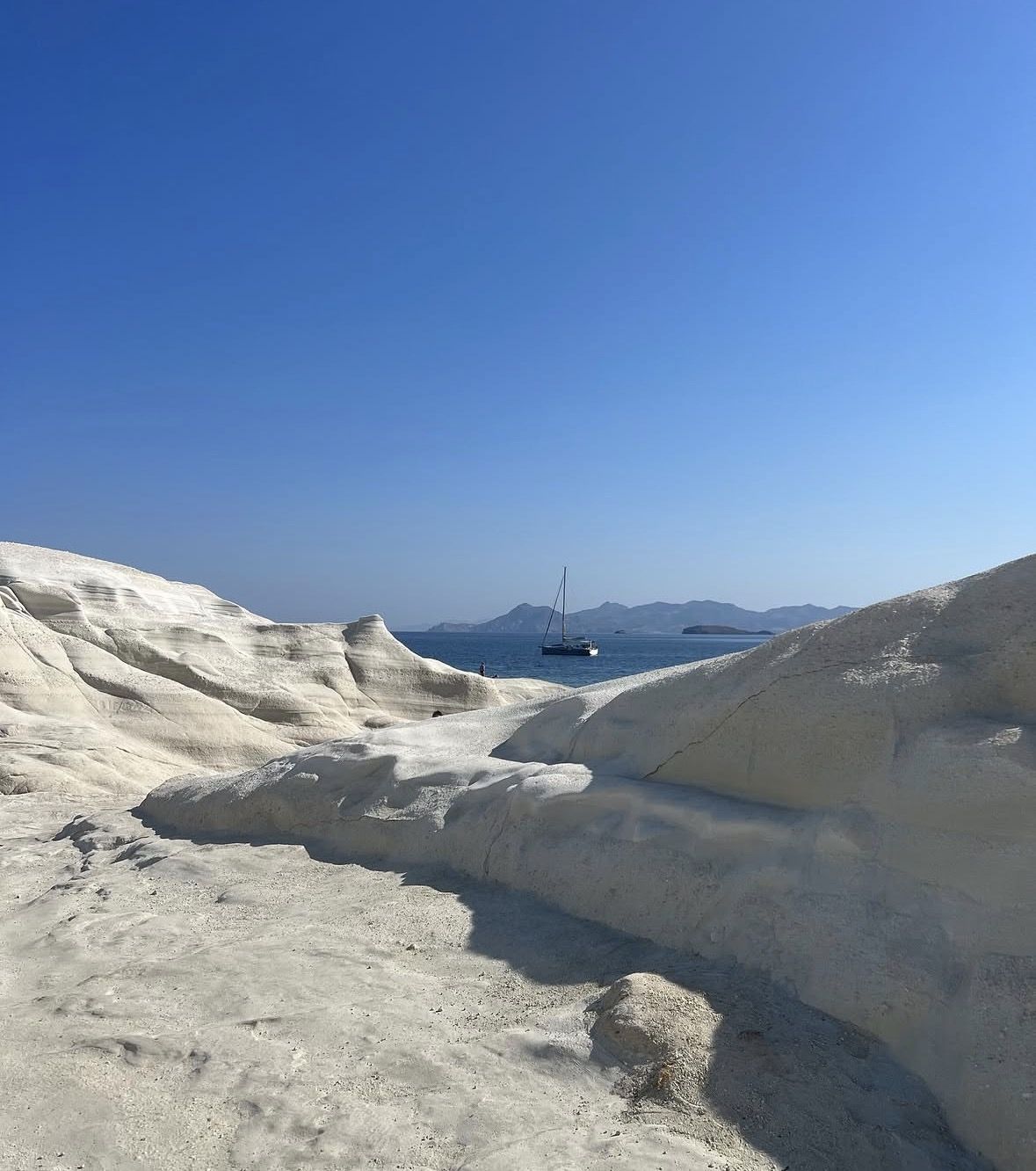
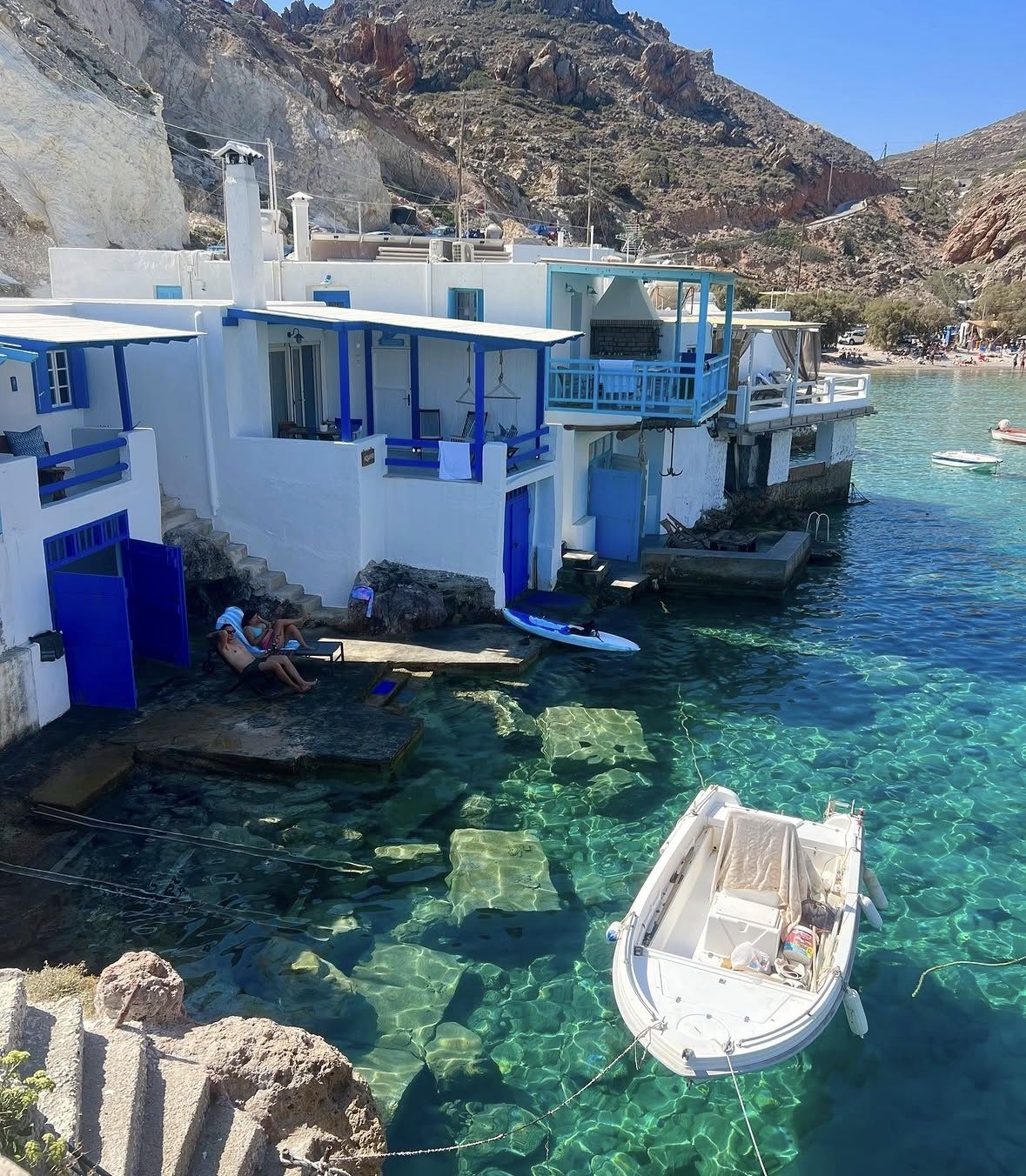
Modern Milos is a place where deep history and natural drama coexist in daily life. Visitors walk through Plaka's whitewashed lanes past Byzantine churches and Venetian-era fortifications, then descend to sea-level fishing villages like Klima, where brightly painted boathouses called syrmata are built directly into the volcanic rock, a tradition dating back centuries. The island's geology continues to shape everything, from the otherworldly coloured cliffs of Sarakiniko to the thermal springs at Paleochori Beach. With over 70 named beaches, many accessible only by boat, Milos offers a diversity of coastal landscapes unmatched anywhere else in the Cyclades, each one shaped by millions of years of volcanic activity.
The spirit of ancient Milos, resourceful, independent, quietly extraordinary, lives on in every corner of this island. Whether you are standing in the catacombs where early Christians sought refuge, gazing at the spot where the Venus de Milo was found in a farmer's field, or watching the sun set over the sweeping bay from the ruins of the ancient theatre at Klima, you feel the extraordinary weight of human experience layered beneath your feet. Milos rewards slow, curious travellers who want more than a beach holiday. It offers a genuine encounter with history, geology, and a way of Aegean life that has endured across seven millennia. Come and discover why this volcanic island leaves no visitor unchanged.
Ready to Experience It Yourself?
From the prehistoric obsidian quarries to the crystalline waters of Sarakiniko, Milos deserves to be explored properly and in depth. Our carefully curated tours connect you with knowledgeable local guides who bring every layer of this island's extraordinary history to life. Book your Milos experience today and step into one of the Mediterranean's greatest untold stories.
Book Your Tour Now